How AI in Certification Training Improves Results
June 15, 2026
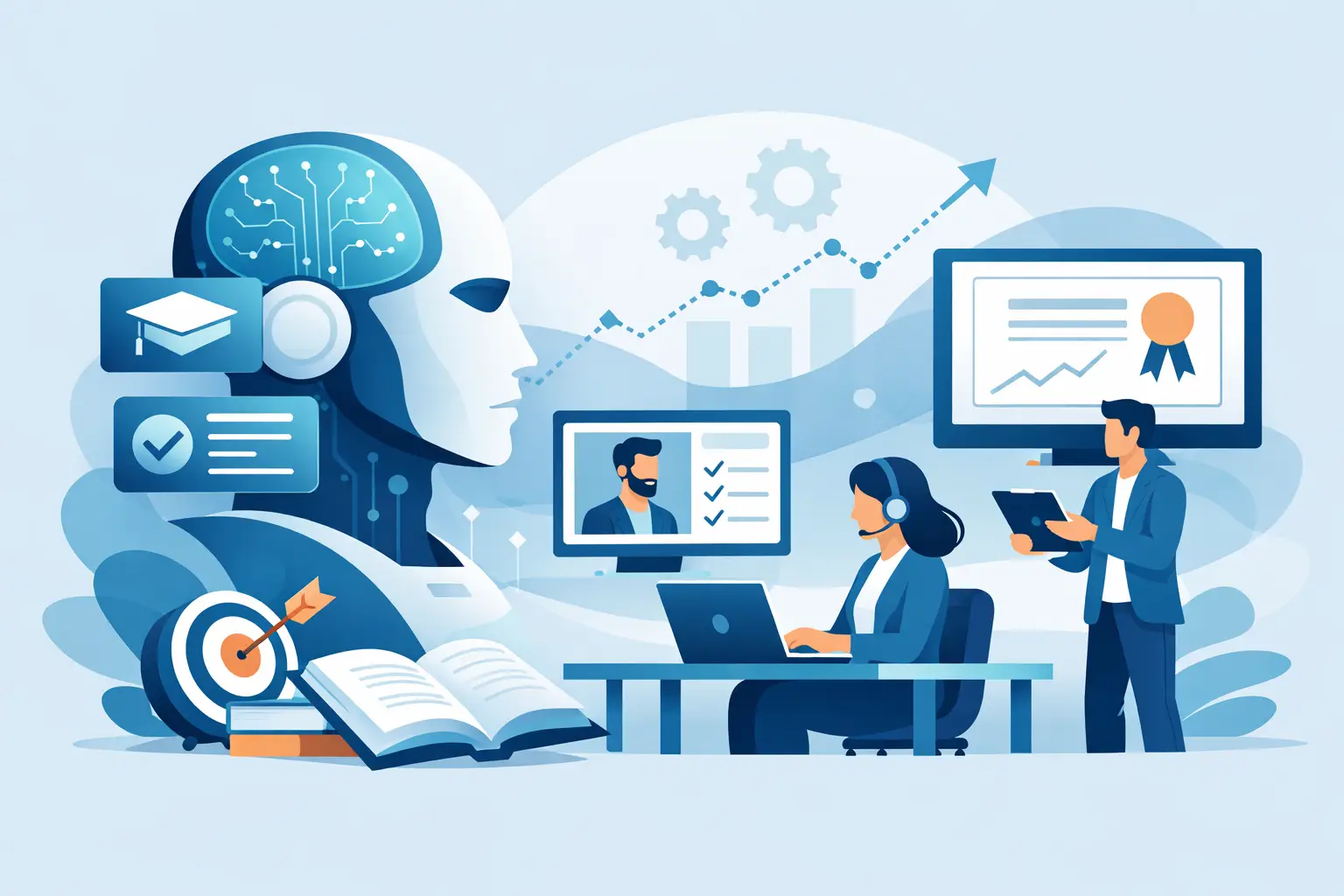
Most certification candidates do not fail because they lack ambition. They fail because their prep is too generic. A static question bank cannot tell you whether you are improving under pressure, where your weak domains are, or how to use the next five study sessions effectively. That is where ai in certification training starts to matter.
For IT and cloud certifications, the stakes are real. Exam fees are high. Retakes cost time and confidence. Whether you are preparing for AWS, Microsoft Azure, Google Cloud, or another technical track, you need more than content exposure. You need a system that helps you perform on exam day.
What AI in Certification Training Actually Changes
AI does not replace the fundamentals of learning. You still need to understand services, architectures, security concepts, and operational tradeoffs. What it changes is the quality of feedback you get while preparing.
Traditional prep tools usually treat every learner the same. They serve the same question set, in the same order, with the same explanation depth. That approach is simple, but it wastes time. If you already understand IAM policy basics, you should not spend another hour there. If networking questions keep slowing you down, your prep should catch that early and adjust.
AI assisted training can identify patterns in your performance, not just your final score. It can see whether you miss scenario based questions, whether your timing breaks down late in a session, or whether you consistently confuse similar services. That changes study from passive review into targeted correction.
For certification prep, that difference is practical. It helps answer the question candidates care about most, am I actually ready?
Why AI in Certification Training Fits High Stakes Exams
Professional certification exams test more than memory. They test interpretation, judgment, and speed. You may know the content and still struggle if you cannot apply it in exam style scenarios.
This is where AI is most useful when paired with realistic simulation. It can adapt difficulty, surface weak areas, and recommend what to study next, but the learning still needs to happen in a format that reflects the exam experience. Without that, progress can look better than it really is.
A candidate who scores well on short, isolated practice sets may still underperform in a timed session with mixed topics and sustained pressure. AI can help close that gap when it works inside a simulator that mirrors the actual test environment. That combination matters more than AI alone.
Adaptive Practice Beats Repetition
Many learners prepare by repeating as many questions as possible. Volume helps, but only up to a point. If your study loop becomes memorization, your confidence can rise faster than your competence.
Adaptive practice is stronger because it forces attention where it is needed. Instead of rewarding familiarity, it pushes your weaker objectives back into focus. If you are preparing for an Azure exam and keep missing governance or identity questions, the system should respond. If your AWS practice shows strong compute knowledge but weak cost optimization judgment, the next sessions should reflect that.
This makes prep more efficient, especially for working professionals. Most candidates are balancing study with jobs, family, or a career transition. They do not need more material. They need the right material at the right time.
That is one of the clearest advantages of AI in certification training. It reduces wasted effort.
Better Study Plans, Not Just More Data
Analytics are useful only if they lead to decisions. A dashboard full of percentages means very little if you do not know what to do next.
Strong AI driven prep turns performance data into action. It can recommend a weekly study plan based on your target exam date, your current domain scores, and the amount of study time you actually have. That matters because most candidates do not struggle with motivation alone. They struggle with sequencing. They are unsure whether to review theory, take a full mock exam, revisit weak domains, or slow down and fix timing issues.
A smart study plan solves that by creating structure. It tells you when to drill, when to simulate, and when to review. It also helps prevent a common mistake, spending too long on familiar topics because they feel productive.
The best plans also adjust. If your networking score improves faster than expected but security remains unstable, your schedule should change. Static plans cannot do that well. AI can.
Realistic Simulation Is Still the Core
AI can personalize learning, but realism is what builds exam readiness. Certification candidates often underestimate how much the testing environment affects performance. Time pressure, question wording, and cognitive fatigue all change how well you use what you know.
That is why simulation matters. A realistic exam style environment helps you practice decision making under the same constraints you will face on test day. It exposes pacing issues. It reveals when your confidence drops after a difficult question. It gives a truer picture of readiness than untimed drills ever can.
This is also where many prep tools fall short. They offer content, but not pressure. They give explanations, but not conditions. For serious learners, that gap is expensive.
When AI support is layered into a realistic simulator, the result is much stronger. You are not just answering questions. You are building exam behavior.
The Tradeoffs and Limits
AI is useful, but it is not magic. That matters because certification candidates are often sold shortcuts when they really need disciplined prep.
First, AI depends on the quality of the training experience around it. If the question bank is weak, the exam simulation is unrealistic, or the feedback is vague, AI will not fix that. It can only improve what is already grounded in solid exam prep design.
Second, not every exam objective should be treated the same way. Some domains require conceptual understanding that goes beyond pattern recognition. If a learner starts relying only on answer cues instead of learning the underlying logic, performance may stall on unfamiliar scenarios.
Third, there is a motivation risk. Personalized systems can make studying smoother, but certification success still requires consistency. No recommendation engine can replace the hard part, showing up for the next session and doing focused work.
So the real question is not whether AI works. It is whether it is being used in a way that improves serious preparation.
What Serious Candidates Should Look For
If you are evaluating tools that claim to use AI, look past the label. The term gets applied loosely.
What matters is whether the platform helps you practice like the real exam, identify your weak domains with specificity, and follow a study path that changes based on your results. Good AI in certification training should make your prep sharper, not noisier.
It should also help reduce exam anxiety by replacing guesswork with evidence. You should know which objectives are improving, which ones are risky, and how your timed performance is trending. That kind of visibility builds confidence the right way.
For many candidates, the most effective setup combines adaptive practice, analytics, weekly study planning, and realistic simulation in one workflow. That is more valuable than reading more theory or jumping across disconnected resources. One focused system beats five scattered ones.
Why This Matters for Career Growth
Certifications are rarely just academic goals. They are career moves. They can help you qualify for cloud roles, strengthen credibility in interviews, and prove practical knowledge in competitive markets.
That is why efficiency matters. If you are a systems administrator moving into cloud, a student trying to stand out, or a DevOps professional targeting the next credential, you want preparation that gets you to a pass with less waste and more certainty.
AI assisted prep supports that goal when it helps you move faster without lowering standards. It should make your study more precise, your weak spots more visible, and your practice closer to the real thing. That is a better path than hoping repetition alone will carry you through.
CertSim reflects this shift well by combining AI assistance with realistic exam simulation, study planning, analytics, and a more engaging prep experience. For ambitious learners, that combination makes sense because passing a certification exam is not about consuming more content. It is about performing when it counts.
The best use of AI in certification training is simple. It helps you spend your effort where it will change your score, then proves that progress under realistic conditions before exam day arrives.
Ready to practice?
Take realistic practice exams with AI explanations and track your readiness.
Start free