Question Banks vs Exam Simulators Compared
July 13, 2026
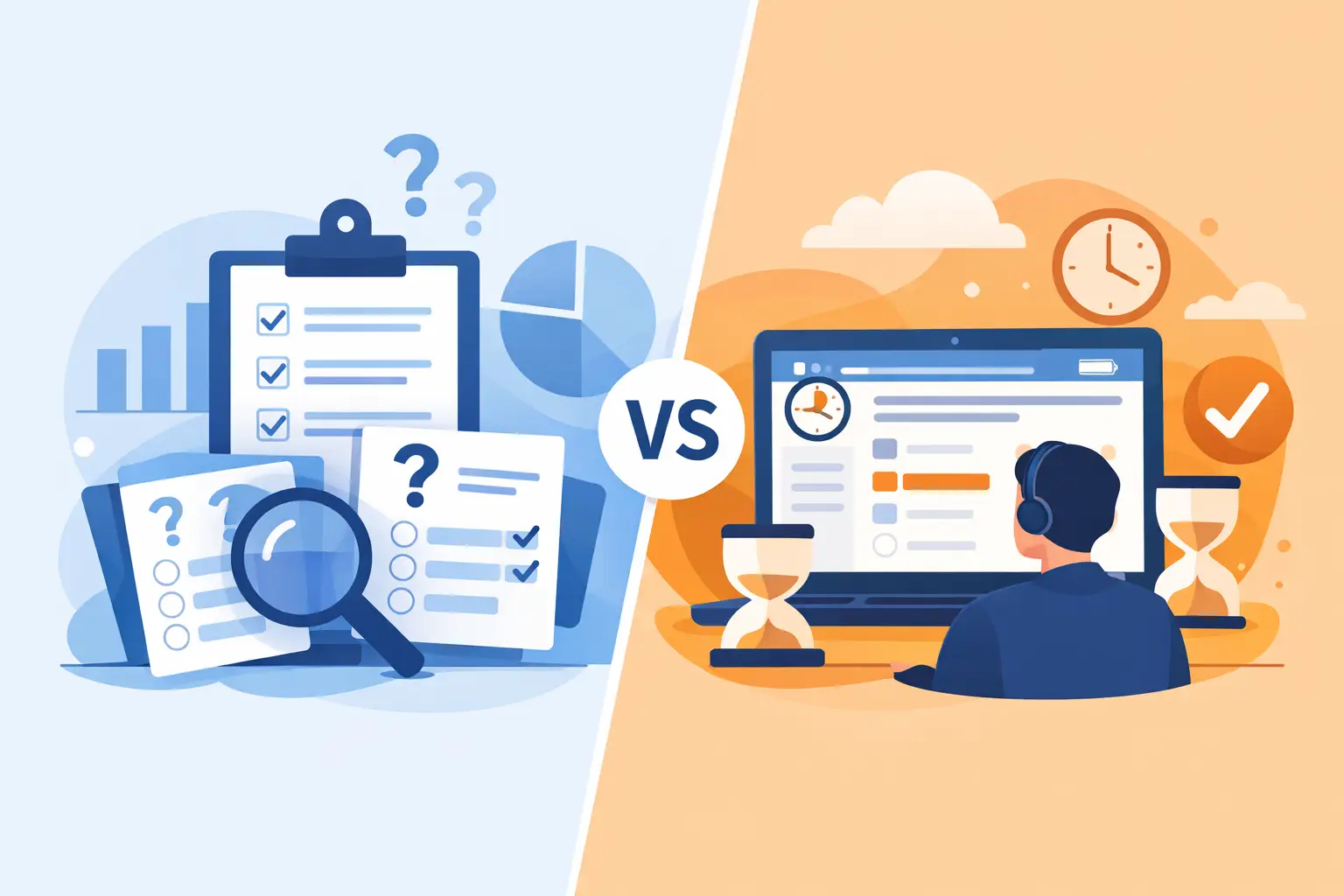
A cloud certification can cost real money, affect a promotion timeline, and demand hours of focused study. That is why the choice between question banks vs exam simulators matters more than it appears. Both can help you learn, but they build different capabilities. One improves recall and exposes knowledge gaps. The other tests whether you can make sound decisions when the timer is running and the questions keep coming.
For AWS, Microsoft Azure, Google Cloud, and other IT certifications, passing requires more than recognizing a correct answer in isolation. You need to interpret scenarios, eliminate distractors, manage time, and stay composed across a full exam session. Your preparation tool should reflect the skill you need most at your current stage.
What a Question Bank Does Well
A question bank is built for repetition. It gives you a collection of individual questions, usually organized by domain, topic, or difficulty. You answer one item, review the explanation, and move to the next. That makes question banks efficient for targeted learning.
If you missed questions on IAM policies, virtual networking, storage classes, or high availability architecture, a focused set of questions can help you isolate the weak area quickly. You can answer twenty questions on one subject, identify the pattern behind your mistakes, review the underlying concept, and try again. This feedback loop is valuable when you are still building your knowledge base.
Question banks also work well in short study windows. A busy systems administrator may have twenty minutes before work or between meetings. Completing a small set of targeted questions feels productive and keeps certification material active in memory. For beginners, this lower pressure format can make unfamiliar topics less intimidating.
The limitation is context. Individual questions do not always show how well you perform after sixty or ninety minutes of decision making. They also make it easy to fall into a pattern of memorizing wording instead of understanding why one architecture choice fits a business requirement better than another.
What an Exam Simulator Measures
An exam simulator recreates the conditions that make certification exams difficult. Instead of selecting a topic and answering a few questions, you complete a timed practice exam that resembles the pacing, breadth, and pressure of the real experience.
That distinction matters. A learner can score well on a question bank because they recognize repeated concepts, take long pauses to look things up, or only practice their favorite domains. A simulator removes much of that comfort. It asks whether you can sustain focus, prioritize information, and choose answers across a wide range of topics without knowing what comes next.
A realistic simulation also reveals timing problems. Perhaps you understand Kubernetes concepts but spend too long reading every scenario. Maybe you perform well early but lose accuracy after an hour. Or you rush the final section because you did not budget your time. These are not content gaps alone. They are exam execution gaps, and they can cost a passing score.
Good simulators provide more than a final percentage. They show performance by domain, identify recurring weak concepts, and help you track whether your scores are improving across attempts. This turns practice into evidence. You are no longer asking, "Do I feel ready?" You are asking, "Can I consistently perform at the required level under exam conditions?"
Question Banks vs Exam Simulators: The Core Difference
The simplest distinction is that question banks support learning, while exam simulators validate readiness. Neither replaces the other.
A question bank is strongest when you need to understand specific material. It gives you repetition, immediate feedback, and a direct way to repair weak domains. An exam simulator is strongest when you need to test the complete skill of passing. It combines knowledge, reading comprehension, judgment, pacing, and confidence.
The right choice depends on your stage. If you are starting Azure Administrator preparation and still mixing up identity, governance, and networking fundamentals, jumping immediately into repeated full simulations may be inefficient. You will receive a score, but it may only confirm that you need more foundational study. Targeted question practice is the better next move.
If you have completed your course, reviewed the documentation, and can explain the core services, individual questions may no longer tell the full story. At that point, timed simulations are more valuable because they expose the gap between knowing material and delivering on exam day.
Why Scores Can Be Misleading
A high practice score is encouraging, but it deserves scrutiny. The source of the score matters.
If you have seen the same questions several times, your result may reflect memory rather than flexible understanding. If you practice without a timer, you may be relying on research habits that will not be available during the exam. If your questions have vague explanations or outdated service details, you may be learning the wrong lesson with confidence.
Look for consistency instead of one impressive result. Can you complete several fresh, timed simulations with stable scores? Are your weakest domains improving after focused review? Can you explain why the incorrect options are wrong, not just why the correct option sounds familiar? These signals are far more useful than a single percentage.
This is particularly important in cloud certifications, where questions often ask for the best solution rather than a merely workable solution. Cost, operational effort, security, resiliency, and managed service preferences can all change the answer. A quality practice environment should train you to weigh those constraints, not hunt for keywords.
A Better Preparation Sequence
For most IT professionals, the strongest approach is to use both tools in sequence. Start with structured learning through a course, documentation, labs, or guided study. Then use topic based questions to check comprehension as you move through each domain.
When you identify a weakness, do not simply repeat questions until your score improves. Return to the concept. Build a small lab if practical, read the service guidance, and explain the decision back in your own words. Then use a new set of questions to confirm that you understand the principle rather than the answer pattern.
Once you have covered the exam blueprint, introduce full simulations. Take the first one honestly, with a timer, no notes, and no pauses for research. Treat the result as a diagnostic, not a verdict. Review every missed question and every answer you got right for uncertain reasons.
Then alternate between targeted remediation and another realistic exam attempt. This cycle preserves the strengths of each format. Question practice makes your knowledge more precise. Simulation practice makes your performance more reliable.
CertSim supports this progression with realistic exam style practice, AI assisted guidance, personalized weekly study recommendations, performance analytics, and gamification that makes sustained preparation easier to maintain.
How to Use a Simulator Without Wasting Attempts
A simulation only works when you respect its conditions. Do not take every practice exam casually while watching messages, checking documentation, or stopping halfway through. Those habits create scores that cannot predict real readiness.
Schedule your simulation when you can focus. Use the same time limit you expect on the actual certification exam. Keep a simple note after each attempt that records your score, the domains that caused trouble, and whether pacing or confidence affected your choices. This gives you a clearer view of progress than raw scores alone.
Avoid taking full exams every day if you are seeing repeated questions. Time between attempts is useful because it lets you study weak areas and reduces the benefit of short term recall. Fresh questions are especially valuable near exam day because they test whether you can transfer your knowledge to unfamiliar scenarios.
Choosing the Tool That Fits Your Goal
Choose a question bank when you need focused practice, quick feedback, and repeated exposure to a specific certification domain. It is efficient for filling knowledge gaps and maintaining momentum during short study sessions.
Choose an exam simulator when your goal is to measure readiness, build time management, and reduce exam anxiety through realistic rehearsal. It is the closer match to the moment that matters: sitting down for a high stakes certification exam and performing without help.
The strongest candidates do not treat practice as a way to collect a reassuring score. They use it to find the next weakness worth fixing. Build knowledge with intention, test it under pressure, and let consistent performance earn your confidence before exam day.
Ready to practice?
Take realistic practice exams with AI explanations and track your readiness.
Start free